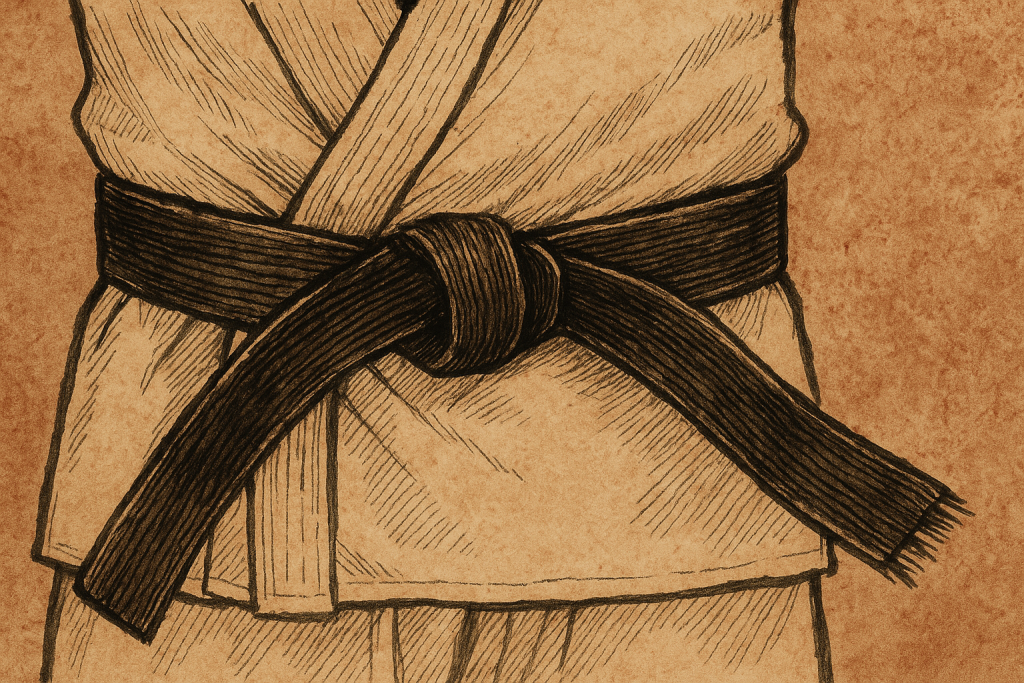
We often say, in traditional martial arts circles, the phenomenon of how a black belt, after years of use, becomes white again symbolizes how a black belt needs to keep the beginner’s mind, otherwise named mushin (無心).
I, for one, have a bit of difficulty accepting this definition, and a meaning to a completely natural effect of clothes being essentially used and damaged through time.
A black belt should maintain the beginner’s mind.
Hmmm, ok. Let’s unpack this a little bit.
White vs Black Belt mindsets
Let’s first start defining a few things.
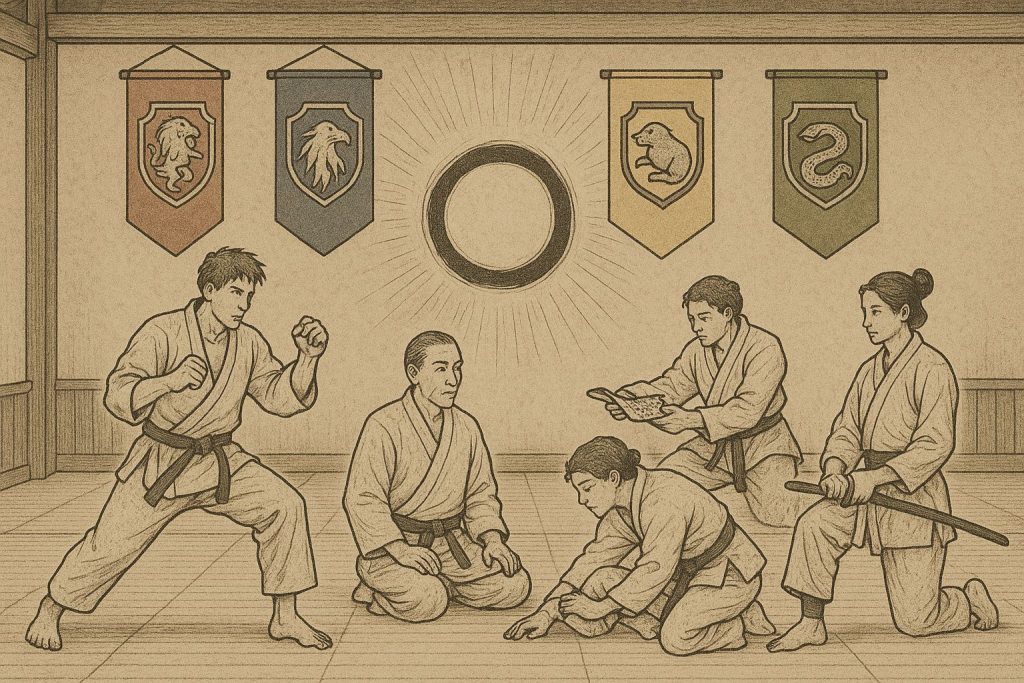
There is this romantic idea that beginners tend to arrive at a new academy or dōjō with the proverbial empty cup, wide eyed, ready to learn and progress.
In over 20+ years of experience and seeing people come and go, I have yet to see a brand new white belt arriving with this level of humility.
They tend to show up with some level of arrogance and nervousness, and usually, unable to control their strength and emotions during sparring.
Is that the mindset that a black belt should have?
Let’s look at the other side of the coin.
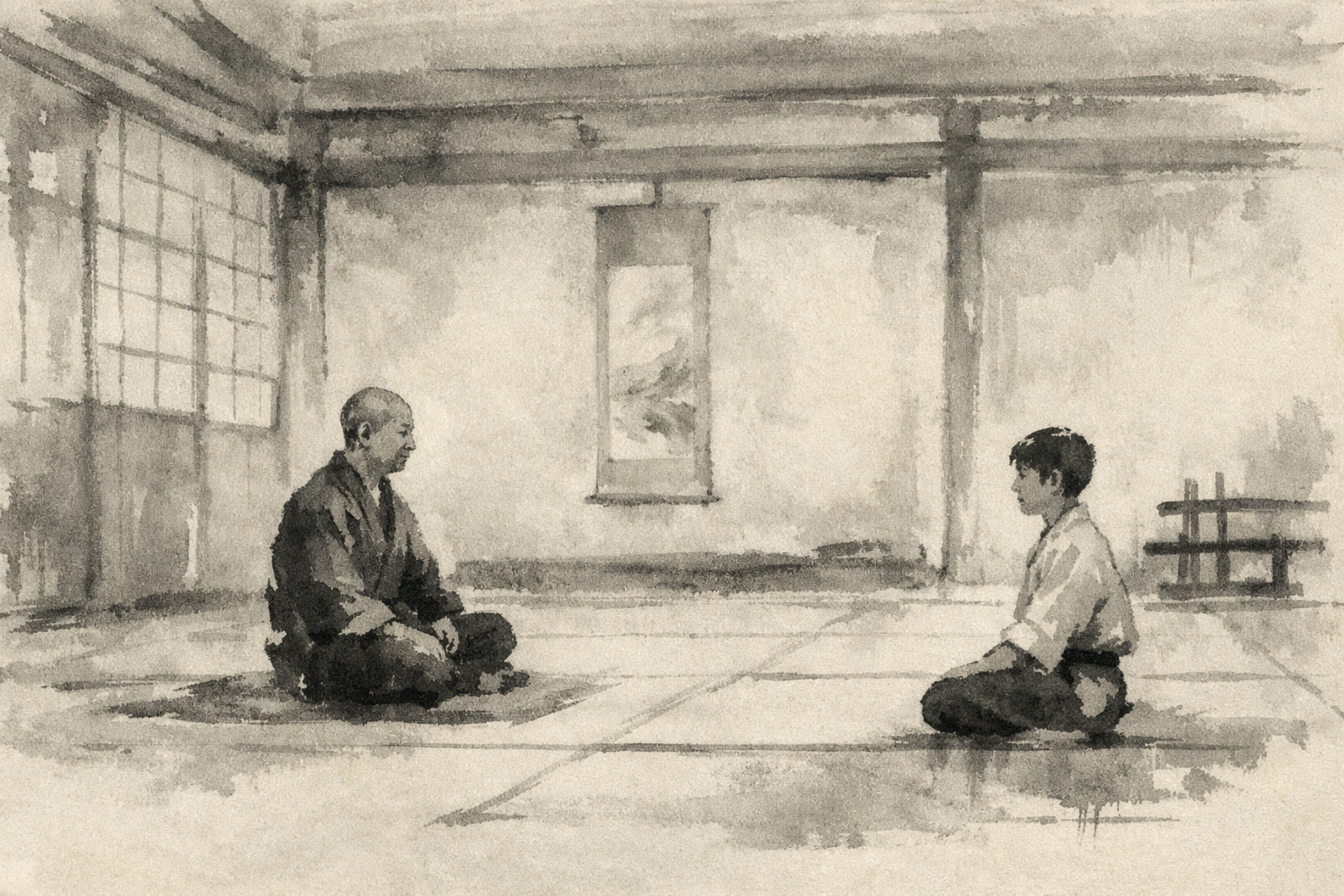
Ideally, a black belt should show humility, wisdom and understanding. A proper black belt has the experience to control their emotions, their strength and should be able to leave their ego at the door. Do all black belts do that? No, obviously not. But this is what is expected of them. Nothing is really expected from a beginner.
So, should a black belt emulate the beginner? As I have presented it, I do not believe so.
Definition of Mushin
So, what is this is whole “mushin” concept? Let’s look at the definition of the word:
無心 (むしん) – Mushin [1]
Noun:
Innocence
Insentient (i.e. plants, inanimate objects, etc. )
Free from obstructive thoughts
Noun: (Transitive)
To pester someone (for cash, etc.)
If we look at the actually kanji, we have:
無 (ない) : nothingness, none, aln’t, nothing, etc.
心 (こころ): heart, mind, spirit
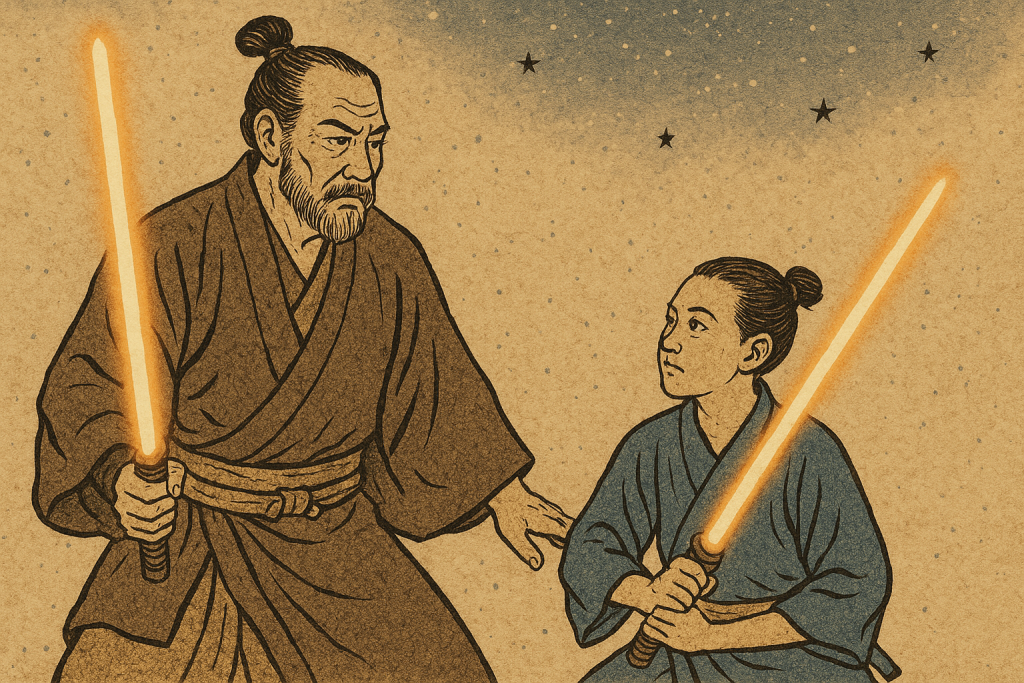
This sound very much like the “no mind” Nobutada repeatedly said to Nathan Algren during training in the movie “The Last Samurai”.
Nobutada : Hai, mind the sword, mind the people watch, mind enemy – -too many mind. No mind.
He was essentially telling Algren that he thought too much and that he needed to clear his head to be able to fight adequately.
Going back to the definition, I think the third definition is what best suits our discussion:
Free from obstructive thoughts
Conclusion
This is what I believe that a black belt, or any martial arts practitionner for that matter, should strive for: to be to fight without thought, without emotions.
That is mushin.
There is much more to mushin and we will unpack all that in subsequent posts.
What about the black belt becoming white you ask? Well, that’s just what it is: an indication that the black belt is actually using his belt repeatedly, hopefully training.
References:
I use an app called Japanese by renzo, inc. for my Japanese studies. I found it to be a great resources for my classes and for learning Japanese in general.