Using Fear to move Forward
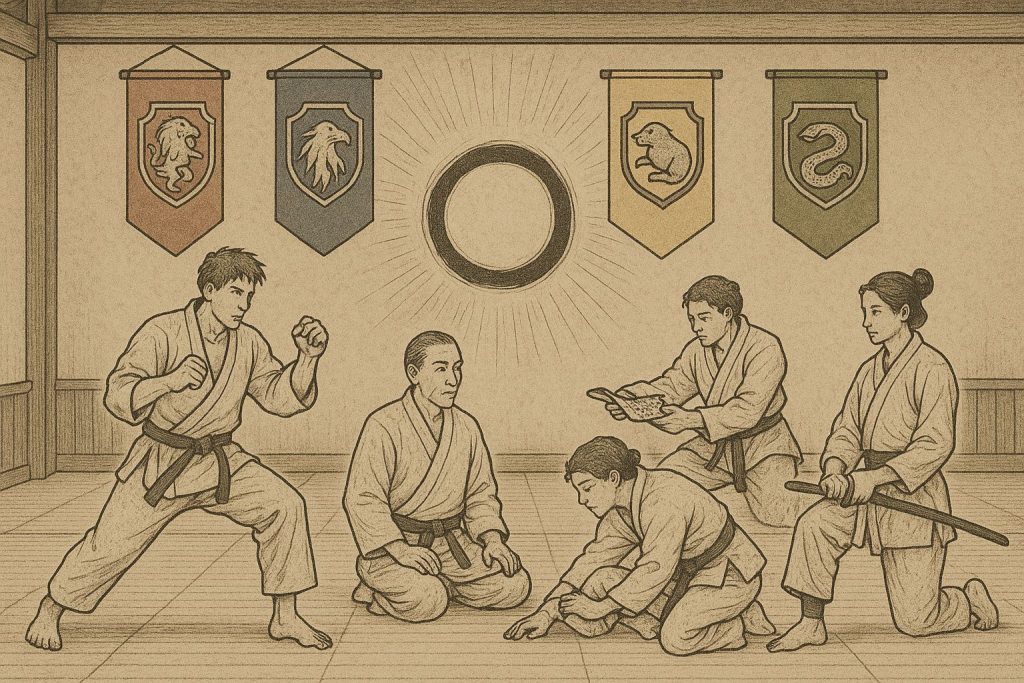
I recently came across a thread on Reddit from a beginner in Kyokushin who shared a familiar fear: sparring (or kumite in japanese). They wrote about freezing, losing their breath, and feeling like they just couldn’t keep up. That, by the way, is absolutely normal. I’d say that the first kumite is usually a shock to the system and often, the first reaction is “What the fierfek was that?”
The important thing here is to train and prepare yourself for kumite, we’ll get to that…
Even if you have some basic training, it’s quite normal to feel like you cannot move. Fear is behind this sentiment and most people freeze before the unknown, and not only the unknown, but also the known fact that you are entering a fight (willingly) and someone else is looking to , well, fight you.
It’s quite normal to think: “Why can’t I move? What should I do?”
The comments on the thread were compassionate and wise and it’s cool to see such a supportive community. Experienced fighters shared what helped them through: breathe, go slow, ask for lighter partners, break down sparring into pieces, and keep showing up (which is critical!). All valid and truthful advice. There is no hiding it, the best way to get better is doing it.
The Mind Before the Technique
In The Book of Five Rings, Musashi speaks of strategy as something deeper than techniques. He urges us to polish the spirit as much as the sword. And in my own journey, I’ve found this to be true: the barrier in kumite isn’t only physical but mental as well and it seems to me that it’s usually ignored in a Martial Arts program.
We can condition the body endlessly, and the thought is that if our body is ready, the mind will follow, true but up to a point.
If we don’t learn to train the mind along with the body, then we will feel ill prepared and fear will ensue. Techniques such as breathwork, visualization, and gradual exposure to intensity all help. But at the core, it’s about learning to stay present when every part of you does not want to be there.
This, to me, is the true value of sparring (and the Martial Arts as a whole), it’s not about winning or losing, but learning how to remain calm in the chaos.
Fear as a Mirror: Martial Arts is Life
Fear in kumite is not so different from fear in life. The same feeling you get stepping onto the mat for your first round? You’ll feel it before a big presentation at work, before an uncomfortable conversation with your partner, before asking a special someone out, before trying something you’ve never done.
You’ll be nervous. You’ll freeze. You’ll forget everything you rehearsed. You’ll doubt yourself. All normal feeling and it’s important for you to know that.
The solution: exposure therapy!
To continue to show up, work, train (practice) and prepare. With time, you’ll slowly find that fear loses its grip. It becomes more and more normal.
As Musashi wrote, “Water adopts the shape of its receptacle… It is sometimes a trickle and sometimes a wild sea.” That is what kumite, and by extension life, demands of us. Adaptability, flexibility and forward momentum.
Drive through the discomfort.
Becoming Unshaken
The black belt used to mean “expert” to me. Now it means something else entirely. It means learning how not to be ruled by fear. It means showing up when I don’t want to. It means sticking around when I want to run.
Kumite still scares me sometimes, especially if I have not fought in a long time. Some things in life do too. The goal isn’t to erase fear, it’s to not let fear erase us, to recognize the feeling (awareness) and manage it.
To the beginner who froze in kumite: you are not alone. Your fear is not weakness. It is the signpost that you’re on the right path. Keep showing up. Keep breathing. You’re stronger than you think.
Osu.